
Why are we the best to work with?
Choose Appear for a seamless migration path that minimises impact while significantly reducing energy and spatial costs. Our resilient X Platform safeguards high-value content delivery, ensures service differentiation, and simplifies operations through IP standardisation—making us the ideal partner for efficient, robust, and future-ready media solutions.
How does it work?
Appear’s X Platform delivers a single stack for satellite reception,transport-stream processing, and distribution. At centralized earthstations, high-density demodulators make transponders permanentlyavailable on the IP network. Feeds are routed over WAN/public internetusing SRT or TSoIP, with centralized routing, monitoring and failover.

Power efficiency
With platforms that ensure 5x less energy consumption than other market-leading solution providers.

Operational efficiency
With the most flexible and resilient platforms that minimise total cost of ownership.

Ultimate capacity
With the densest, most scalable media processing and delivery solutions on the market.
Evolving from
Distributed Satellite to Centralized IP
Legacy satellite models were built for a different era — one defined by fixed infrastructure and isolated workflows. Today’s hybrid and IP-first environments demand centralized control, flexible routing, and automation at scale. Here’s what that transformation looks like.
Pre-Migration (Legacy Model)
A distributed satellite architecture built site by site.
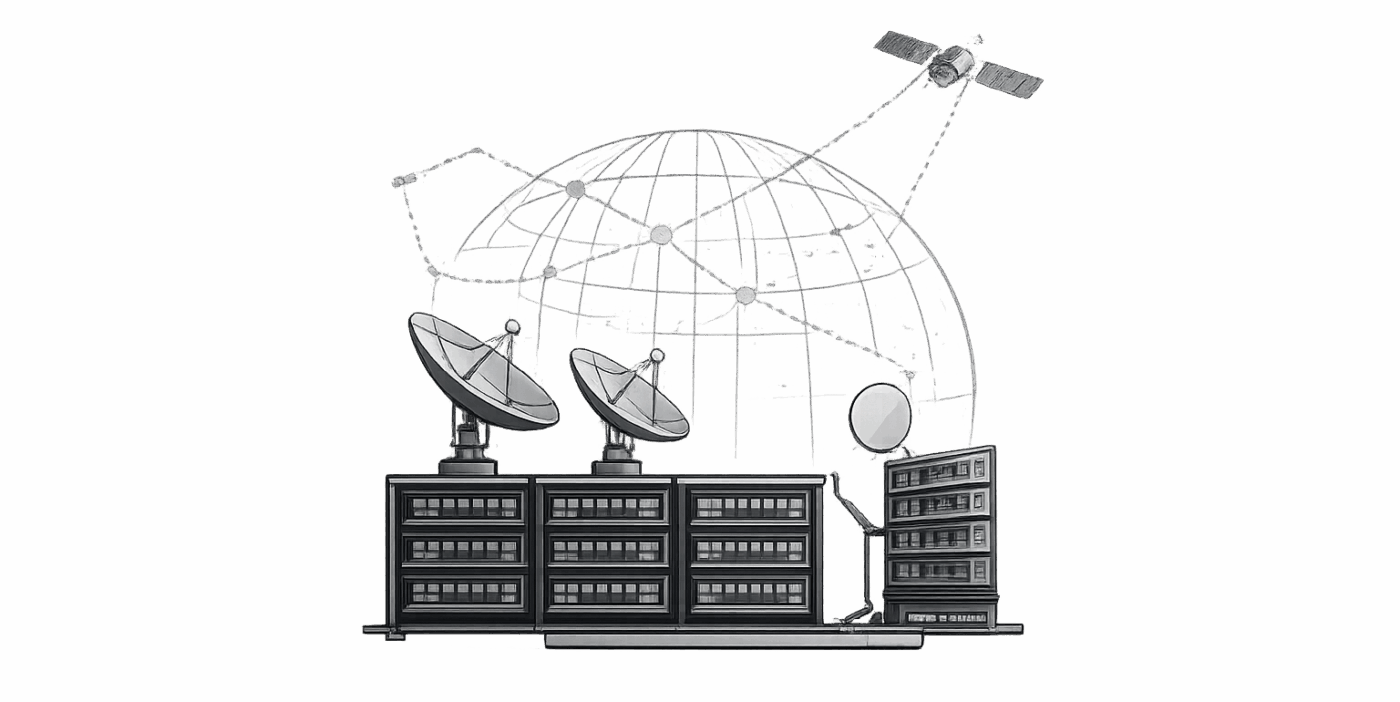

Site-Based Infrastructure
Each location operates its own dish, IRDs, and RF routing stack. Hardware is duplicated across facilities, increasing footprint and complexity.

Limited Signal Flexibility
Satellite signals remain tied to individual sites, making sharing, scaling, or reallocating capacity operationally difficult.

Manual Operations & Risk
No centralized monitoring or failover. Visibility is limited and specialist engineers are required across multiple locations.
Post-Migration
(X Platform)
A centralized, IP-based model built for efficiency and resilience.
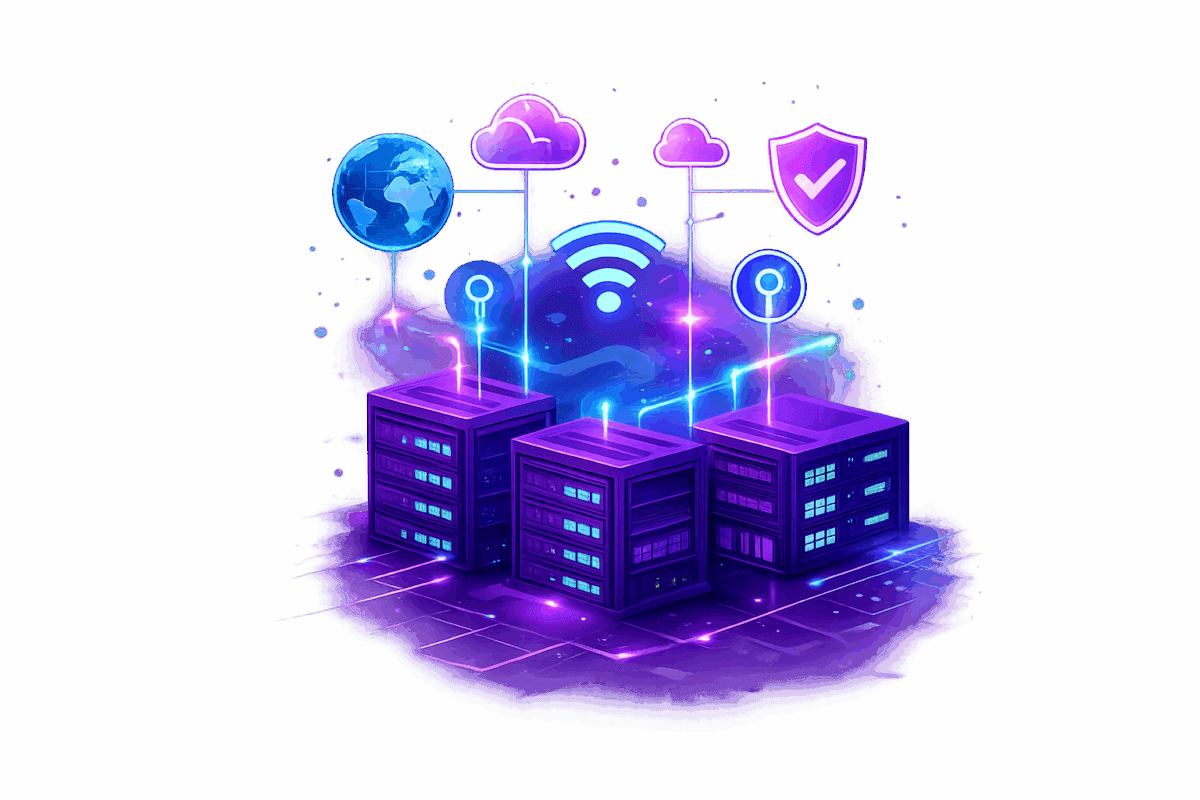

Centralized RF & Demodulation
Satellite RF is terminated at core earth stations and converted directly to TSoIP and/or SRT in a compact, high-density environment.

IP Distribution at Scale
Transport streams are securely delivered over WAN or public internet, removing legacy RF routing and enabling flexible signal sharing.

Automated, Resilient Operations
Integrated redundancy, open JSON-RPC APIs, and orchestration support enable monitoring, automated routing, and seamless failover.
Appears Satellite-to-IP Migration Guide
Ready to reduce receiver stacks, simplify affiliate operations, and move distribution to IP with broadcast-grade reliability?
Download our Satellite-to-IP brochure for key design considerations and practical guidance on migrating from satellite-centric workflows to secure IP delivery—using Appear’s X proven products in deployment or earth stations, regional hubs, and remote sites.
Fill Out The Form To Access Guide
Customer stories
Discover how our customers are transforming their operations with our innovative solutions. Explore real-life success stories showcasing how businesses like yours have achieved remarkable results with our tailored, cutting-edge offerings.
LTN and Appear Collaborate to Enable Scalable, IP-Native Live Video Contribution and Distribution
Appear’s high-performance, ultra-low latency encoding platform augments LTN’s fully managed global IP network and orchestration...
Read more
NBC Sports selects live production technology provider for its production of 2026 Milan Cortina Winter Olympics and Paralympics
NBCUniversal to Present XXV Olympic Winter Games Feb. 6-22, 2026 and 2026 Milan Cortina Paralympics March 6-15, 2026 NBC Sports to...
Read more
Appear to Showcase Next-Generation Hybrid Live Production at NAB Show New York
SRT is a powerful technology for contributing and distributing live content that, when enhanced by...
Read more
How hardware-accelerated SRT can balance content opportunities and video transport costs
SRT is a powerful technology for contributing and distributing live content that, when enhanced by...
Read more
Telefónica Servicios Audiovisuales Hit the Back of the Net with LaLiga Deal
Telefónica Servicios Audiovisuales and Appear selected by LaLiga to power Spain’s new contribution & distribution...
Read more
The future of remote production: Innovations, challenges, and the X Platform advantage
The broadcasting industry is rapidly evolving with the rise of remote production, also known as...
Read more
Real-world impact: Transforming media efficiencies with Appear’s X Platform
“The deployment of Appear’s X20 and X10 platforms significantly streamlined our infrastructure, reducing our equipment...
Read more
Orange Slovakia choses Appear for centralised VAR delivery
Appear X Platform provides high-capacity contribution for Orange Slovakia’s centralised VAR production Oslo, Norway –...
Read moreFrequently Asked Questions
Everything you need to know about migrating from legacy satellite infrastructure to centralized IP distribution with X Platform.
What actually changes when moving from a distributed satellite model to a centralized IP model?
In a legacy satellite architecture, each site operates independently with its own dishes, IRDs, and RF routing hardware. This creates duplicated infrastructure, limited signal sharing, and higher operational complexity.
With a centralized IP model, satellite RF is terminated at core earth stations and converted into IP-based transport streams. Signals are then securely distributed over managed WAN or public internet using standards such as TSoIP and SRT. This allows broadcasters to share, scale, and reroute services dynamically without duplicating hardware at every location.
Does moving to IP reduce resilience or reliability?
No — when designed correctly, it significantly improves it.
Centralized architectures enable automated routing, monitoring, and failover. With standards such as ST 2022-7 and SRT, streams can be protected across diverse network paths. Instead of relying on isolated, site-level redundancy, resilience becomes centrally managed and orchestrated — increasing visibility and reducing manual intervention.
How does this impact operational costs and complexity?
Migrating to IP reduces both hardware footprint and specialist touchpoints.
By consolidating RF demodulation and converting to IP centrally:
-
Edge sites no longer require full satellite stacks
-
Power, cooling, and rack space requirements decrease
-
Onboarding new affiliates or services becomes faster
-
Centralized APIs allow integration with orchestration platforms
The result is lower operational overhead, simplified infrastructure, and greater scalability — without compromising broadcast-grade performance.